
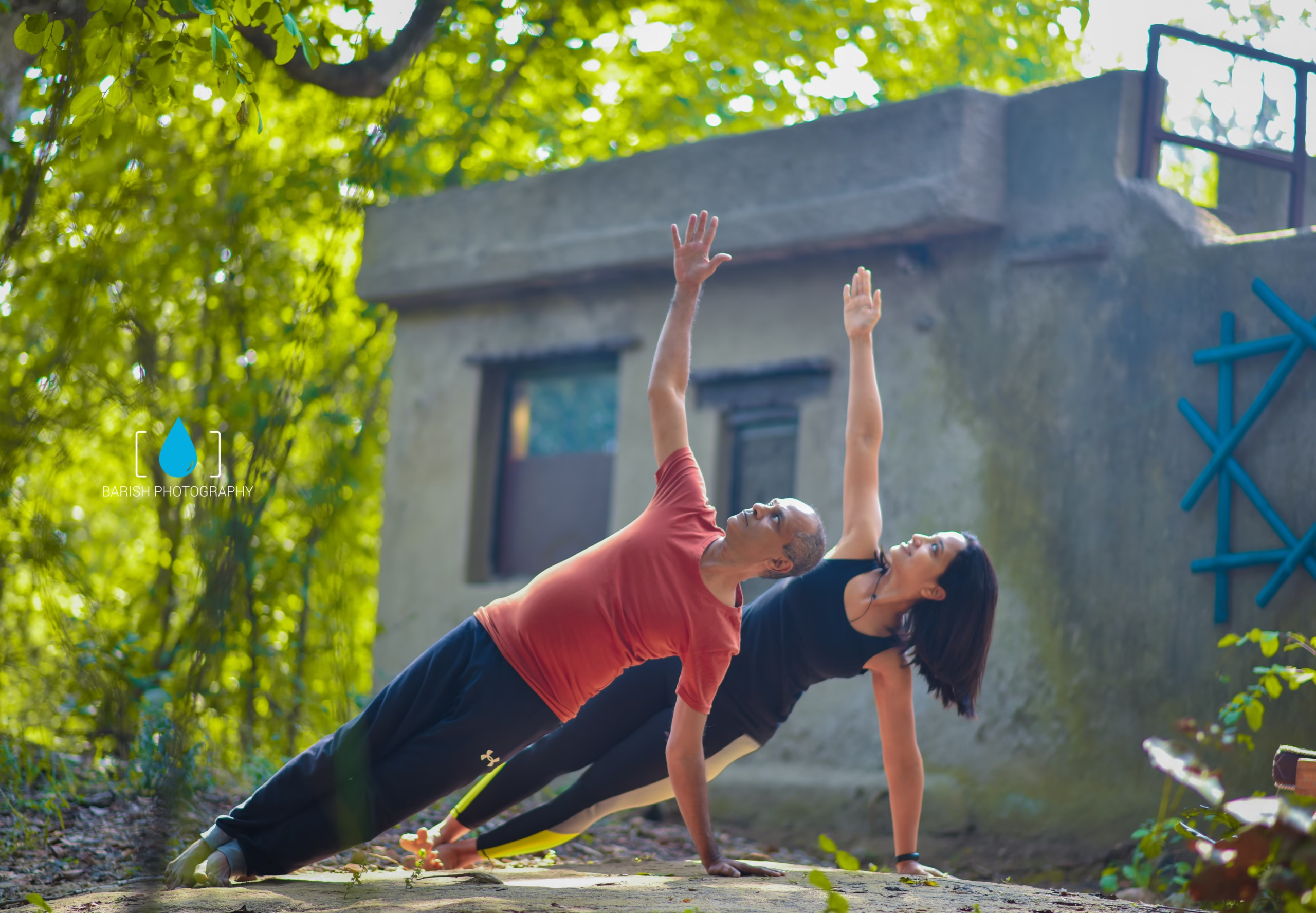
A Guide, by Satavisha (Senior Trainer – Yoga Teacher Training Yukta Yoga)
| Quick Answer A 200-hour Yoga Teacher Training (YTTC) is a foundational program covering asana, anatomy, pranayama, meditation, philosophy, teaching methodology and ethics usually recommended after at least six months of personal practice. In India, look for Yoga Alliance (RYS 200/RYT 200) or Yoga Certification Board (YCB, Ministry of Ayush) accreditation — the two are not interchangeable.Choose a school on trainer expertise, batch size, curriculum depth and post-course support — not price alone.Yukta Yoga runs small-batch, Yoga Alliance-registered 200-Hour YTTCs led by Satavisha and Achal. |
I’m Satavisha, and I have been practising yoga for the past 18 years. Like many people, I initially came to yoga looking for relief from my own physical and emotional struggles. At first, I thought of yoga mainly as a practice that could help me feel better.
But with time, something deeper began to unfold. Yoga gradually became a journey of self-observation and understanding. It taught me to look beyond the physical practice to observe my thoughts, responses, habits, and patterns, and to understand myself with greater awareness.
With time, I wanted to share what I had experienced with others and make their journey easier both on and off the mat. But I still had doubts. Am I experienced enough? Do I understand the philosophy? Can I actually teach someone else?
Even after practising yoga for five years, I remember wondering whether I was really ready to take my practice further with a yoga teacher training.
After much thought, I finally decided to take my 200-Hour Yoga Teacher Training with Yoga Alliance, USA. That decision taught me something important: you do not need to know everything before beginning your training. You need the willingness to learn, observe, practise, and grow.
A 200-hour Yoga Teacher Training Course (YTTC) is generally designed as a foundational professional training for practitioners who already have some familiarity with yoga. At Yukta Yoga, we recommend at least six months of yoga experience before entering this journey, because having a basic connection with the practice allows you to understand and absorb the training more deeply.
So if you’re looking for a yoga teacher training programme to understand yoga beyond physical postures, are confused about which school to choose, or are wondering whether a 200-hour training can genuinely help you — this guide will help you make a more informed decision.
What Is a 200-Hour Yoga Teacher Training?
A 200-hour YTTC is a foundational teacher-training programme that introduces you to the major dimensions of yoga. It is not simply 200 hours of practising difficult asanas.
A well-designed programme brings together asana, anatomy and physiology, pranayama, meditation, yoga philosophy, teaching methodology, sequencing, alignment, Sanskrit terminology, and professional ethics.
For students training through a Yoga Alliance-registered school, RYS 200 programmes follow Yoga Alliance’s educational framework, which includes Techniques, Training and Practice; Anatomy and Physiology; Yoga Humanities; and Professional Essentials.
Completing a 200-hour training at an RYS 200 school can make you eligible to apply for the RYT 200 credential with Yoga Alliance, subject to its registration requirements.
But certification should not be the only reason you join. The real purpose is to develop enough understanding and personal experience to practise yoga responsibly, and eventually guide others safely.
The Intelligence Behind the Practice and Teaching
Imagine two students entering the same yoga class.
One may be energetic and restless. Another may be mentally exhausted. One may need grounding, while another may need stimulation. One person may have excellent flexibility but poor stability; another may have strong muscles but limited mobility.
Should they all receive exactly the same practice?
This is where a deeper understanding of yoga becomes important. A teacher needs to consider the student’s physical condition, experience, energy, mindset, lifestyle, and intention. The choice, duration, intensity, sequencing, and modification of asanas can therefore change according to the individual.
A 200-hour training should teach you to observe rather than simply instruct. The question gradually changes from “Which pose should I teach?” to “What does this person need from this practice today?” That shift is an important part of becoming a responsible yoga teacher.
Yoga in Rhythm With Life
Yoga is also about when and how you practise. The same practice may feel completely different depending on the time of day, energy level, season, lifestyle, or mental state. A stimulating sequence may be useful at one point, while a slower, grounding practice may be more appropriate at another.
This is also where yoga philosophy becomes practical. The philosophy taught in a 200-hour programme should not remain limited to books or lectures. Concepts such as awareness, discipline, self-observation, non-attachment, and mindful action can influence how you practise, teach, work, communicate, and live.
That is why philosophy is not an optional decoration added to a teacher-training curriculum. It provides context for the physical practice and for the teacher’s relationship with students.
Yoga Alliance, YCB, and Certification Pathways in India
Yoga Alliance is one of the internationally recognised organisations through which yoga schools and teachers can pursue registration credentials. Its RYS 200 designation represents a foundational 200-hour teacher-training programme, while RYT 200 is the corresponding teacher credential for individuals who meet the requirements.
In India, another important framework is the Yoga Certification Board (YCB) under the Ministry of Ayush. YCB works with certification and accreditation systems for yoga professionals and institutions, specifying requirements around curriculum, faculty development, course delivery, assessment, feedback, and institutional processes.
These pathways are not necessarily interchangeable. Before enrolling, understand exactly which organisation is recognising the course, what credential you receive, and what it allows you to do. Do not select a school merely because its website uses words such as “international,” “certified,” or “registered.”
Yoga Alliance (RYS 200 / RYT 200) vs. Yoga Certification Board (YCB) — At a Glance
| Yoga Alliance (RYS 200 / RYT 200) | Yoga Certification Board (YCB) | |
| Governing body | Yoga Alliance, USA (international, non-governmental) | Ministry of Ayush, Government of India |
| Nature of credential | RYT 200 (Registered Yoga Teacher) | YCB-certified Yoga Instructor / Teacher, by level |
| Recognition | Widely used across international studios and wellness brands | Recognised within India’s government and Ayush ecosystem |
| Best suited for | Teachers who plan to teach internationally or at studios requiring Yoga Alliance registration | Teachers seeking a government-recognised credential within India |
Note: a school may hold one, both, or neither accreditation. Always verify directly before enrolling.
How to Choose a 200-Hour Yoga Teacher Training
Choosing the right RYS 200 affects your entire learning experience. Here’s what to check before joining one.
- Check the expertise of the trainer: Research their education, specialisation, teaching experience, personal practice, and approach. More degrees never make a better trainer; look for someone who explains complex concepts clearly and demonstrates how yoga works in real life.
- Check the batch size: Smaller batches allow more interaction, observation, feedback, and personal attention. Ask every RYS about its average batch size; too many students per trainer makes individual correction difficult.
- Don’t choose based on cost alone: A programme’s fee typically covers faculty, accommodation, learning materials, practical sessions, assessment, facilities, food, administrative support, and certification. Instead of asking what a course costs, find out what you actually get for that investment.
- Go through the curriculum: Ask for a detailed syllabus before enrolling. Does it include anatomy, philosophy, teaching methodology, practice teaching, meditation, pranayama, modifications, sequencing, and ethics? A good trainer cannot compensate for a weak curriculum.
- Ask about practice teaching: Teaching differs from practising. You need real opportunities to teach, receive feedback, make mistakes, and improve.
- Understand the schedule: Two YTTCs may both advertise “200 hours” yet feel completely different. Check how the hours are distributed, how intensive the days are, and how much time is left for practice and reflection. Yoga Alliance sets specific instructional-hour limits per day for RYS programmes.
- Look beyond the certificate: Speak to former students. Ask whether they received personal attention, found the teachers approachable, actually learned to teach, found the philosophy meaningful, felt their personal practice changed, and received support after completion. Their answers say more than any promotional photograph.
Is a 200-Hour YTTC the End of Your Yoga Learning?
No. And perhaps this is the most important thing I would tell someone standing where I once stood.
A 200-hour TTC is the beginning, not the ultimate destination. Once you complete it, you may realise there is a lot more to learn. Anatomy in greater depth, workshops on therapeutics or alignment, meditation, prenatal yoga, other traditions, advanced teacher-training programmes, or simply more time on the mat.
Yoga education should not stop when you receive the YTTC certification. Attend professional workshops, join relevant programmes, learn from experienced teachers, read, practise, observe, and ask questions. These are what refine your teaching.
Most importantly, allow yoga to be part of your life instead of something you teach only for an hour each day. The certificate may say you completed 200 hours. But the real education starts when those 200 hours become part of how you breathe, think, teach, respond, and live.
Frequently Asked Questions
What is a 200-hour Yoga Teacher Training (YTTC)?
A 200-hour YTTC is a foundational teacher-training programme covering asana, anatomy and physiology, pranayama, meditation, yoga philosophy, teaching methodology, sequencing, and professional ethics. It prepares practitioners to teach yoga responsibly, not just to perform advanced postures.
Do I need to be flexible or advanced to join a 200-hour YTTC?
No. Most schools, including Yukta Yoga, recommend at least six months of consistent personal practice rather than any particular flexibility level. What matters more is your willingness to learn, observe, and grow.
What is the difference between Yoga Alliance (RYS 200) and YCB certification in India?
Yoga Alliance is a US-based international registration body, and its RYT 200 credential is widely recognised across global studios. The Yoga Certification Board (YCB) operates under India’s Ministry of Ayush and is recognised within India’s government and Ayush ecosystem. The two are separate systems with different requirements, so check which one a school actually offers.
How long does a 200-hour YTTC take to complete?
This depends on the school’s format. Some run as an intensive residential programme over 3–4 weeks; others spread the same 200 hours across weekends or evenings over several months. Yoga Alliance also sets limits on how many instructional hours a school can schedule per day.
Is RYT 200 certification enough to start teaching yoga professionally?
RYT 200 is a foundational credential, not a finish line. Most teachers continue to build real teaching competence through practice teaching, feedback, workshops, and continuing education after their 200-hour training.
How do I choose the right 200-hour yoga teacher training school?
Evaluate the trainer’s expertise, batch size, curriculum depth, opportunities for practice teaching, and schedule structure and speak to former students wherever possible. See the full checklist above for details.
About Satavisha: 18 years of personal yoga practice, RYT-200 certified with Yoga Alliance, USA, and co-founder of Yukta Yoga, teaching alongside Achal in Mumbai and Bhopal.
Ready to take the next step?
Enquire about Yukta Yoga’s upcoming 200-Hour Yoga Teacher Training
📧 Email: yuktayoga.wellness@gmail.com📞 Phone: +91 99891 88366